






Gaze Labeler — eye tracking in radiology
2024Concept and hypothesis testingOverview
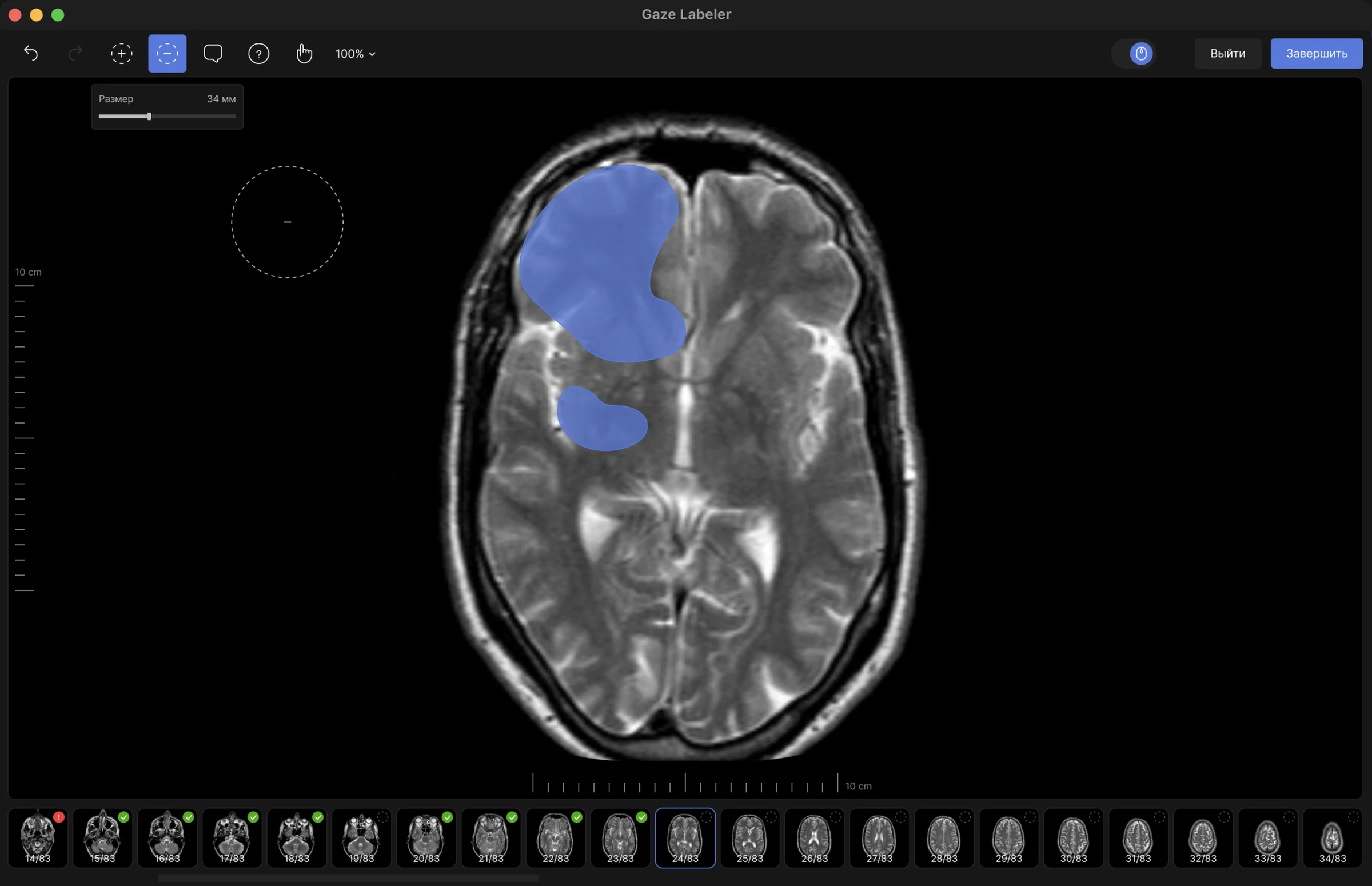
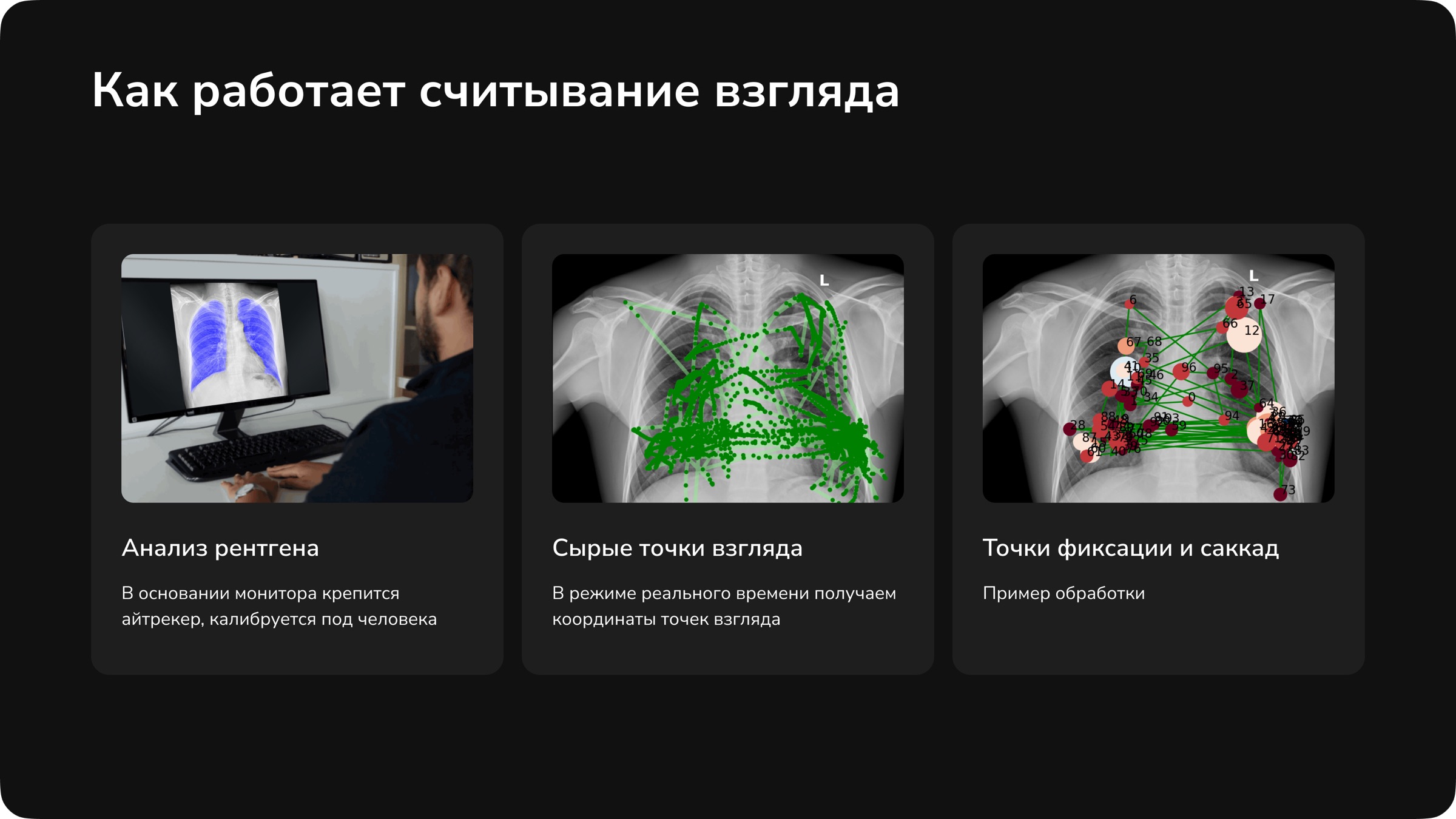
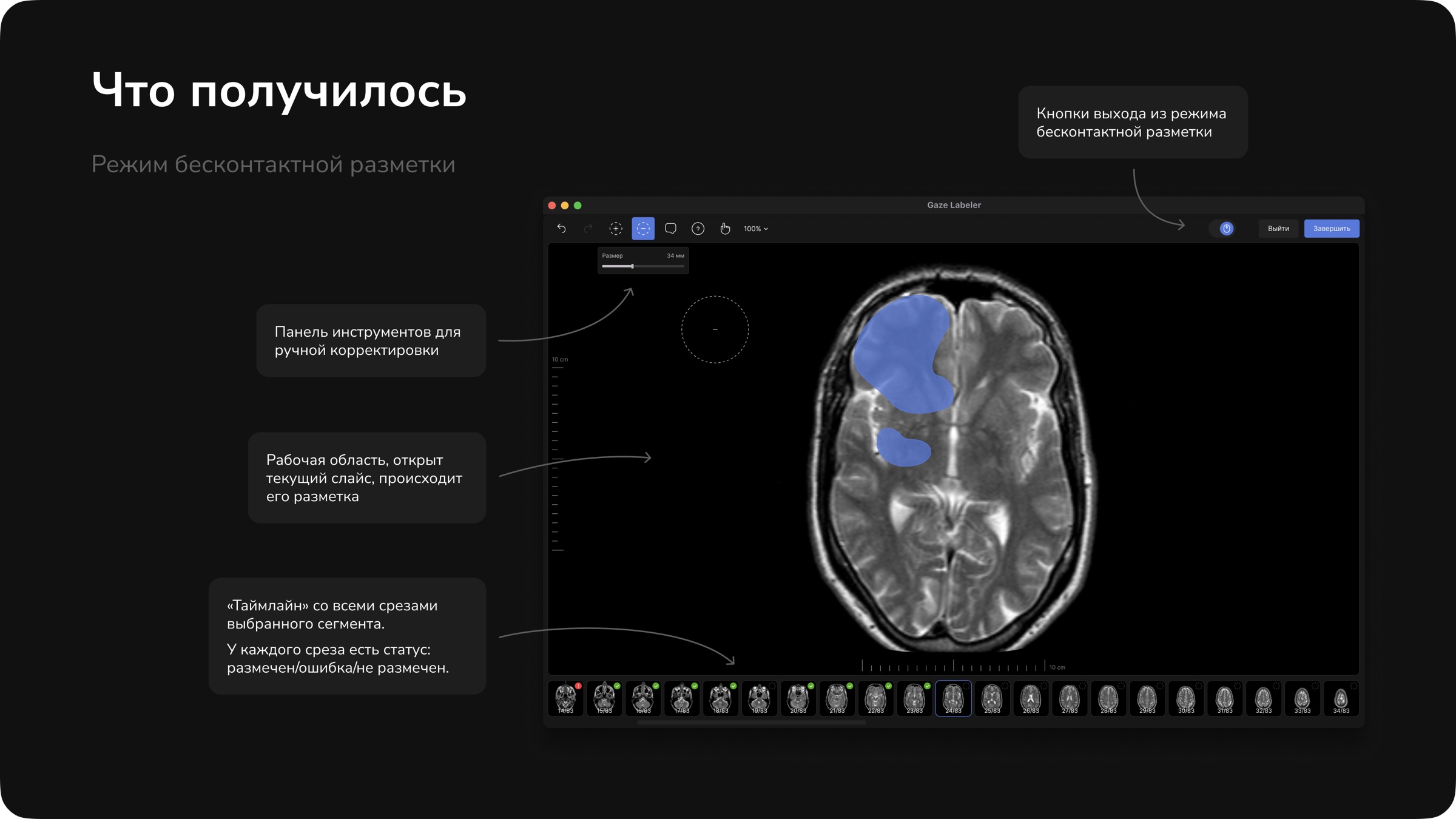
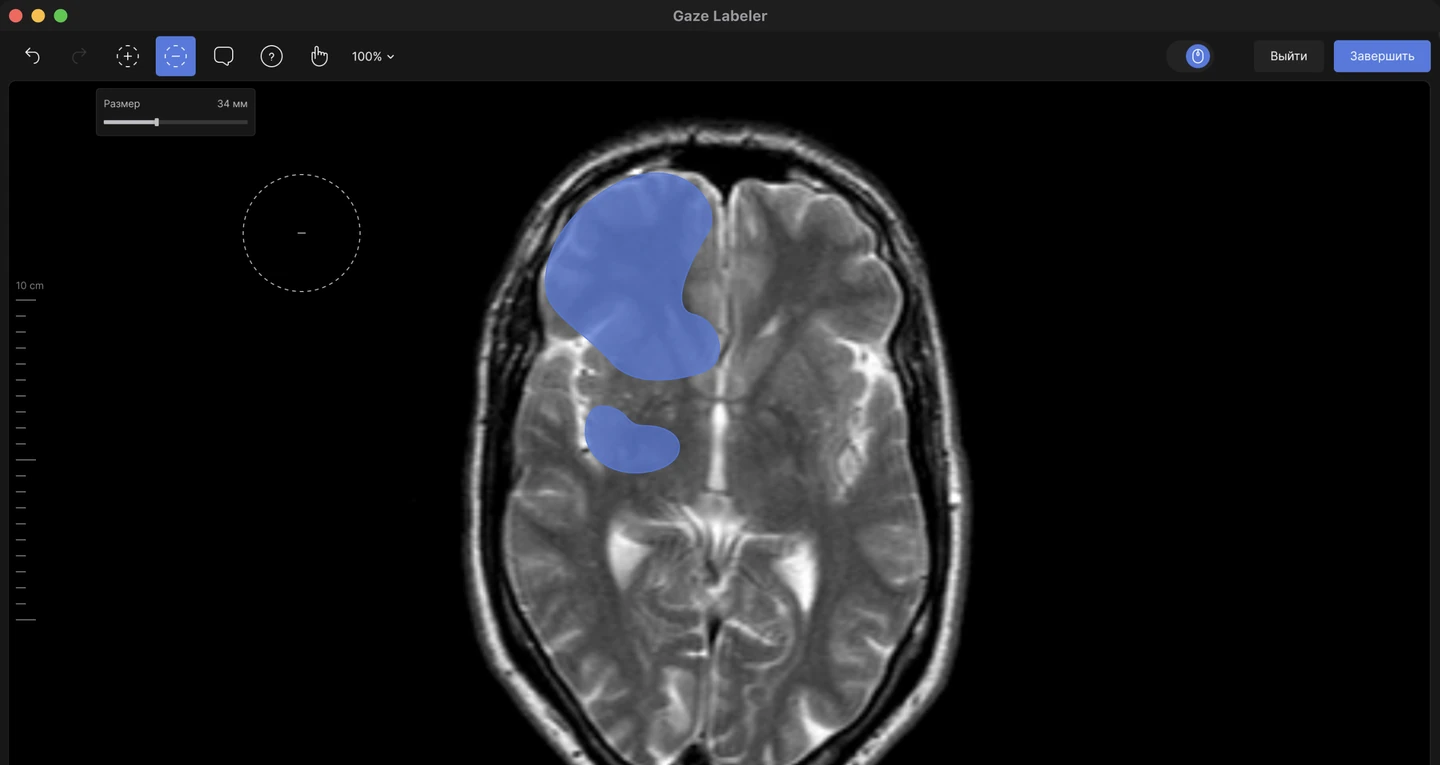
Besides research, the AI in Medicine Lab team annotates medical data. The head of the lab, Ilya Pershin, invented and developed an eye-tracker-based touchless annotation technology that speeds up annotation many times over.
Problem
Manually annotating a CT/MRI scan on the existing platform takes 3 to 8 hours, and highly specialized expert annotators are scarce. In the experiment, gaze-based annotation was twice as fast as manual annotation.
How the work went
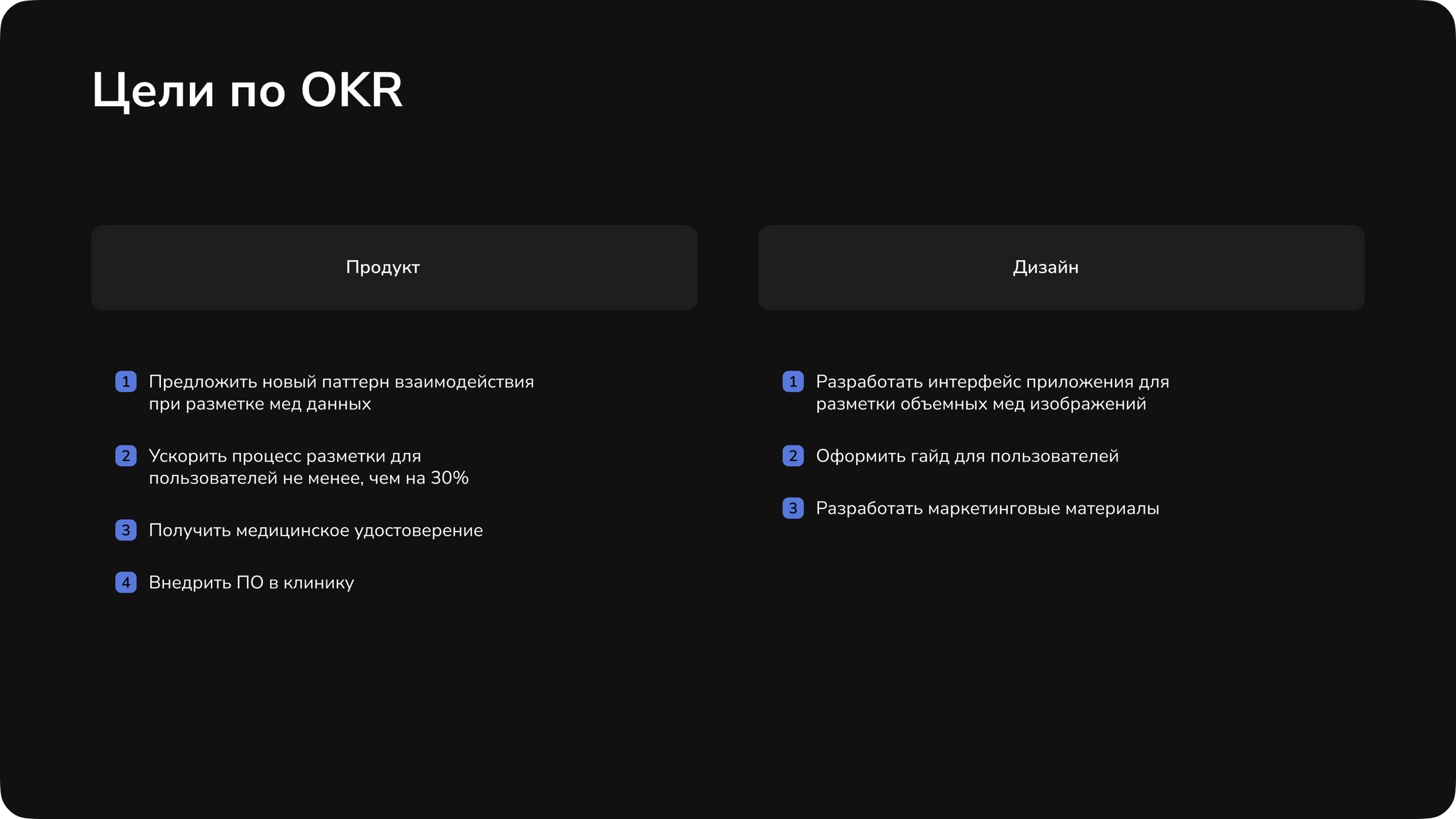
I defined the project goals. Preliminary tests showed that we definitely could and should improve the speed of work in the software.
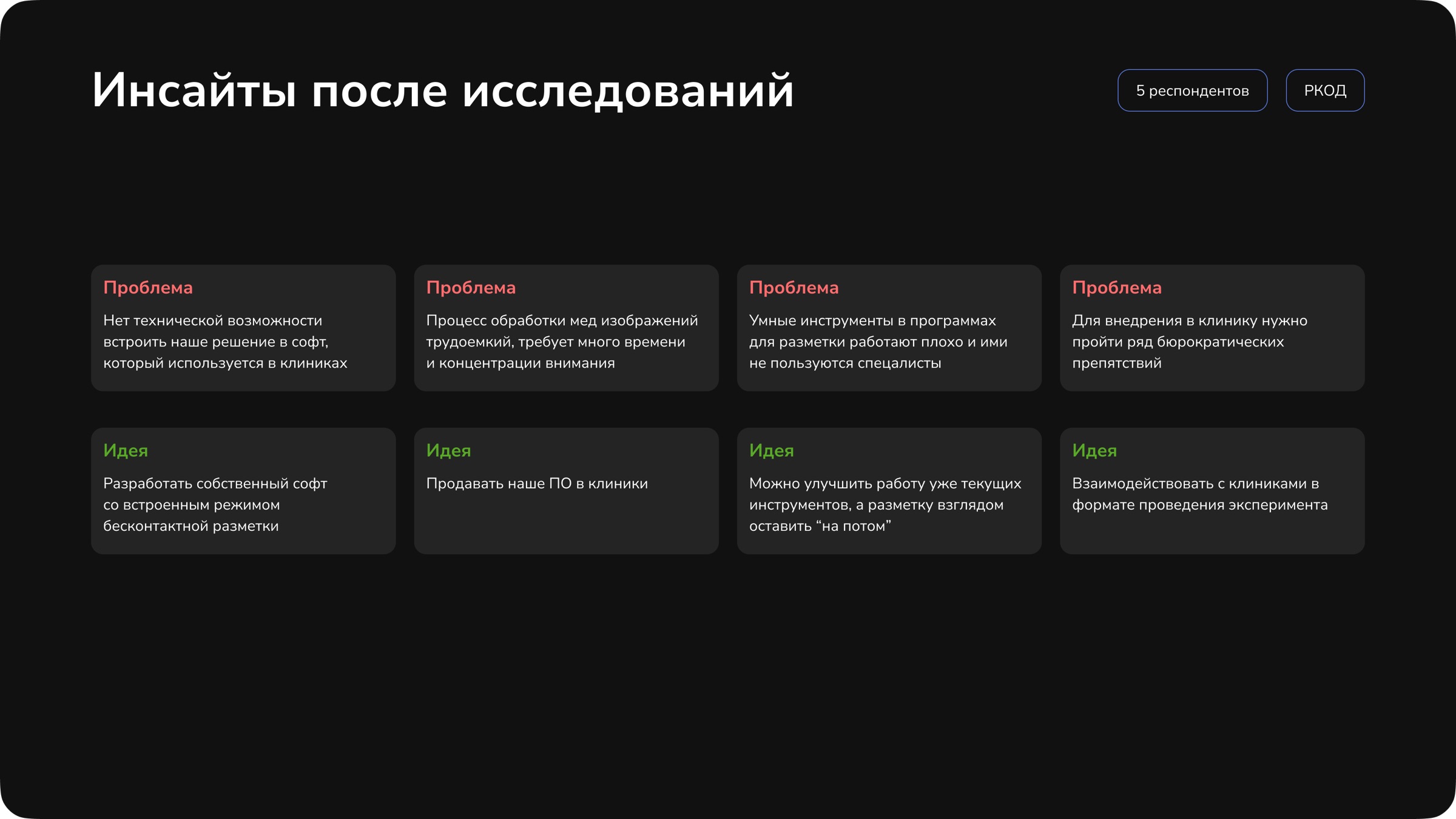
Together with the head of the lab, we started research. I drew up a plan for in-depth interviews with potential users: annotators and clinics that could adopt our product. Respondents included the head of the radiotherapy department at the Republican Clinical Oncology Dispensary, a radiologist from the University of Pittsburgh and several annotators of different specializations from the dispensary.
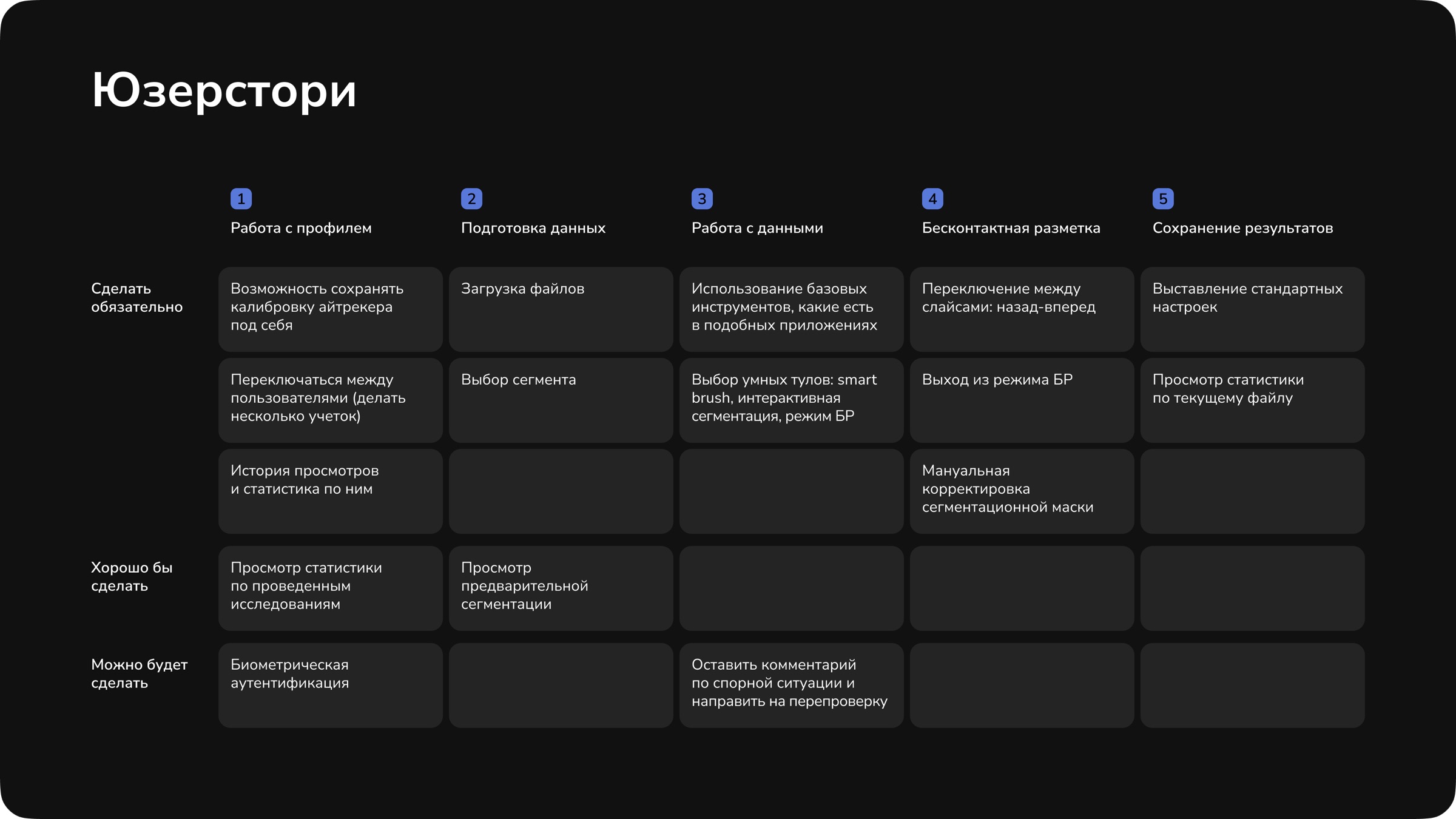
Exploring the market from the inside, we saw the potential to build software not only for ourselves and our annotators, but also to sell the solution to clinics. I prioritized the backlog of hypotheses and problems by impact and feasibility and wrote user stories.